
The new food allergen laws, specifically applying to “unwrapped” foods, have been in place for about 18 months now and it would appear that the debate about “fad or fear”, “implement or ignore” and “benefit or bothersome” still rages on. Speaking as both a food safety, HACCP and food allergen trainer, but also as a dining member of the public that has food allergies, I am both amazed, on the one hand by how simple and effective some restaurants have made the process of eating out and on the other hand at how some venues are still totally oblivious to the requirements of this piece of legislation.
I hope this blog puts what food businesses need to know into easily digestible chunks and is of some benefit to those still unsure of how to implement or process the changes.
Since December 2014, all food businesses – from Michelin starred restaurants to pie and mash shops to the roadside burger van – must be able to give clear and accurate information about the allergens present in every product they serve to customers; ‘I don’t know’ is no longer acceptable and could lead to significant fines implemented by Local Authority inspectors.
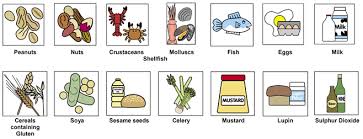
The Food Information for Consumers Regulation 2014 (FIC or FIR) states that businesses must communicate to customers which dishes or food products contain any of 14 specified allergens, including gluten, peanuts, shellfish, soya, milk and celery, either through accurate written information, for example on the menu or a noticeboard, or by giving clear instructions on how customers can obtain the information from staff.
It’s more difficult than at first glance, guidance from regulators and local authorities has been, in some cases, non-existent, slow to appear, unclear and confusing, meaning many food outlets, especially small ones, are either unaware of the new developments or unsure how to implement them.
It’s not easy to accurately identify, record and communicate allergens in dishes for a start but with a bit of care, communication and training, there is no reason why every food business cannot be one of those that “amazes” me when I walk through the door.
UNDERSTAND WHY
The new regulations haven’t been introduced just to make life more difficult for small food business operators; they are to help the growing number of people who fear eating out because of the allergic reactions, sometimes severe, they have to certain foods.
The aim is to enable those with food allergens and intolerances to be able to choose, purchase and enjoy food without fear of the consequences.
It is not “all in the mind” or all down to fad diets; data from the Food Standards Agency Annual Science report 2013/14 shows that hospital admissions due to food allergies increased by 87% from 2002 – 2013 with some 4800 admissions attributable to allergic reactions to food in 2012/13, up to 8% of children & 2% of adults in the UK have a food allergy and 1 in 100 suffer from coeliac disease. These people have a right to eat food safely too and if you can cater for them well this is adding to your potential marketplace.
CONTACT YOUR SUPPLIERS
Caterers and other food outlets, need to work with their suppliers to ensure they have the most up-to-date information for the ingredients in all of their products via manufacturer’s specification sheets. Of course, in some cases, this will be easier said than done.
Small, artisan style or local suppliers may not be aware that they also have obligations to fulfill; contact them directly to remind them of their allergen labelling obligations, perhaps suggest they contact Trading Standards if they are struggling with requirements.
And if they don’t “toe the line” then be quite clear in letting them know that you will be withdrawing your orders until they comply with legislation.
On the other hand, some larger suppliers are much more clued up than the operators themselves. Many suppliers have created guides to understanding the legislation, and how it applies to their products. For example, 3663, has created a QR code reader called Rapid Ingredients Checker (RIC) to help you find out what’s in your dish. It will tell you everything you need to know, including ingredients, nutritional information and allergen details.

IMPLEMENT A SYSTEM
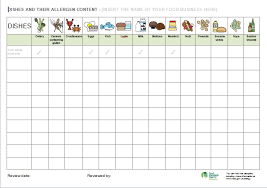
Once the allergen information’s there, it’s crucial to have a system in place for it to be updated in real time, so the information provided to customers is always accurate.
For small businesses, this can be as simple as a spreadsheet, or utilising the recipe cards or other resources available on the Food Standards Agency website, while for larger operations with more resources, there are more high-tech options, like menu systems that utilise supplier ingredients information. Some of these can be affordable for smaller operators, depending on menu size, variety of dishes and other factors.
CONSIDER YOUR MENUS
It may be appropriate for food businesses to think about the possibility of offering dishes that are adapted to be suitable for both allergy and non-allergy customers. This can be much more cost effective for food businesses, providing they are managing the risks of cross contamination with food allergens during preparation, cooking and service. This can be much more cost effective and easier to manage in a busy kitchen.
Food service companies can also review the allergens they currently use, determining precisely where they are in each dish so they can work out if dishes can be slightly adapted for allergy customers. For example if allergens are added in a garnish, dressing or sauce towards the end of the cooking process; if this is left off, can the dish be suitable for those with a food allergy.
INFORM YOUR CUSTOMERS
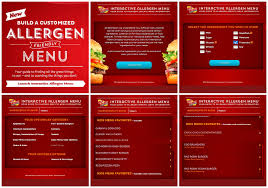
It is a requirement of the legislation that customers are clearly signposted to allergen information, or where / how to find it, therefore food business operators should update their front-of-house materials such as menus or blackboards to provide accurate information.
It can be a big job to reprint and update
information, but this is not always necessary, providing customers know where to access the information, this could be in separate documentation.
Which ever way the information is provided the law states that it must be clear and complete and therefore needs to be accurately recorded and verifiable, this will also form part of the food business HACCP (food safety management) plan.
AVOID CROSS CONTAMINATION
Although the new regulations don’t cover allergen cross contamination, the expectation is that if offering food to a customer that has food allergies then that food must be safe from harm and enforcement officers will expect to see methods in place to prevent cross contamination.


These will, in many ways, be much the same as the prevention of cross contamination of food poisoning organisms, such as the use of single-use disposable cloths, colour coding equipment to give separation of use, handwashing procedures and planning preparation routines and space to avoid cross contamination, however there are some additional extras such as storing any of the top 14 food allergens in sealed lidded containers and considering processes such as cooking methods as a potential for contamination with allergens, such as deep frying where the oil may contain allergens.
STAFF TRAINING
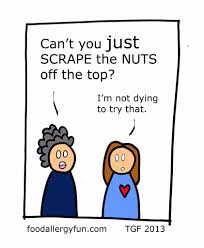
The legislation requires all businesses to have 100% knowledge of the 14 named allergens in the ingredients they’re using – and that means all employees, it doesn’t matter who they are or how long they have been employed, all staff need to be aware of the issues when handling food for those with allergens – it only takes 1 person who lacks understanding of the issues to be responsible, unwittingly, for introducing an allergen into a meal.
Training can either be through an accredited Food Allergy Awareness course or as part of more generic Level 2 or 3 Food Safety training, which is then cascaded to other team members in house, but it needs to be completed and updated regularly.
REFRESH
It’s not just training that needs to be updated on a regular basis; it is critical that all information relating to food allergens is kept 100% up to date.
Looking through your menu, or food products, once is not enough; you need to regularly check ingredients from suppliers and that you are aware of any ingredient or product substitutions. Any substitutions that contain additional or different allergens have to be updated in the information you are providing to your customers.
IF IN DOUBT; GET HELP
Still confused? Despite the fact that there is still a lack of awareness, or understanding of the new regulations there is plenty of help available.
The Food Standards Agency (FSA) has a wealth of support and information available on its website and links to supporting documentation; many of the breweries have provided their publicans with detailed information and support on food allergens, many of the larger suppliers and technology providers have full details of food allergen management systems, and, of course, private training organisations and consultants such as Jill Taylor Consulting can offer advice, guidance and training to support businesses both large and small.
IT IS A BUSINESS OPPORTUNITY
People with coeliac disease alone make up 1% of the UK population, a potential market of £100 million according to Coeliac UK. Gluten is just one of the 14 allergens covered by the legislation. When someone with a food allergy or intolerance “eats out” that person usually makes the decision where they go – be it with family, friends or any other occasion. If you can cater for that person and make them feel safe, and above all, welcome, they will return time and time again – and they will also tell others they know with similar problems about you and your business – is this trade you can afford to turn away?


